
Condition
Help For Anal Fissure
Help For Anal Fissure
and Sharp Anal Pain
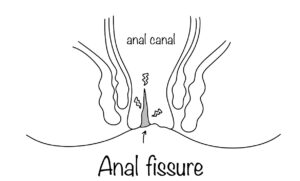
An anal fissure is a small tear in the skin of the anus. It often causes sharp pain when you pass stool, followed by burning pain that can last for hours. You may also see a small amount of bright red blood.

Why Fissures Happen
Hard stool and straining are common causes. Diarrhoea, childbirth, inflammatory bowel disease and other conditions can also play a part. Pain makes the anal muscle tighten, which can reduce blood flow and slow healing.
Common Symptoms of Fissures
Anal pain especially after defaecation associated with bright red rectal bleeding. Often there is a small skin tag that can be felt next to the site of the pain.
First Treatment
- Keep stool soft with fluid, fibre and the right laxative if needed.
- Warm baths and simple pain relief.
- Prescription creams that relax the anal muscle.
- Review any cause of constipation or diarrhoea.
If The Fissure Does Not Heal
Options can include an injection of botulinum toxin (Botox) to relax the muscle, a small cut in the muscle called lateral internal sphincterotomy, or a laser-based fissure procedure in selected cases. Each option has different evidence, benefits and risks. Feylix procedures are performed under local anaesthetic when suitable.
Why Assessment Matters
Severe anal pain can also come from an abscess, a blood clot in an external pile, infection or another condition. Fever, swelling and worsening pain need urgent assessment.

Symptoms & Conditions
Unsure What Treatment You Require
Get in touch with our team today and we can advise.
Questions People Ask
The pattern of sharp pain during a bowel movement and burning afterwards is typical, but an examination is needed to be sure.
Many recent fissures heal with soft stool, creams and time. Long-lasting fissures may need another treatment.
It relaxes the tight anal muscle for a period of time. This can reduce spasm and help the tear heal.
Cutting part of the internal sphincter can be very effective, but it may change bowel control in some people. Your existing control and pelvic floor history must be considered.
Early evidence and clinical use are developing. It should be offered only after a clear discussion of other established options and the limits of current evidence.