Pilonidal Sinus Treatment: How SiLaC Laser Offers a Less Invasive Approach
A non-destructive way of treating a painful problem.
A non-destructive way of treating a painful problem
If you have a pilonidal sinus, recurring pain, swelling or discharge can make sitting, exercising and working uncomfortable.
You may also be worried about treatment, particularly if you have heard about surgery involving a large open wound and weeks of dressings.
For suitable patients, SiLaC laser treatment offers a less invasive alternative. By treating the sinus tract from within, it aims to resolve the problem while preserving more of the surrounding skin and tissue.
In this guide, we explain pilonidal sinus disease, how SiLaC works, and how it compares with traditional surgical excision.
What Is a Pilonidal Sinus?
A pilonidal sinus is a small opening or tunnel beneath the skin, usually in the cleft between the buttocks near the tailbone.
Loose hairs can enter the skin and trigger inflammation, leading to a cavity or network of tunnels. The condition can cause an acute abscess or develop into a persistent sinus with repeated discharge and infections.
It is an acquired condition and should not simply be attributed to poor hygiene.
What Symptoms Can a Pilonidal Sinus Cause?
Symptoms may include:
- Pain or tenderness at the top of the buttock cleft.
- Swelling or a painful lump.
- Pus or blood leaking from an opening.
- Repeated episodes of inflammation.
- Difficulty sitting comfortably.
Some sinuses cause no symptoms and can be observed without an operation. A painful, swollen or discharging lump needs medical assessment.
What If I Have a Pilonidal Abscess?
An abscess is a collection of pus that may develop suddenly and cause significant pain.
A painful pilonidal abscess usually needs prompt drainage. Antibiotics may also be appropriate, but they do not reliably replace drainage of an established collection.
This is different from planned treatment of a chronic sinus. Once the acute infection has settled, your surgeon can assess whether further treatment, such as SiLaC, would help.
Ask for an urgent GP appointment or contact NHS 111 if you develop a painful lump that bleeds or leaks pus.
What Is SiLaC Laser Treatment?
SiLaC stands for sinus laser-assisted closure.
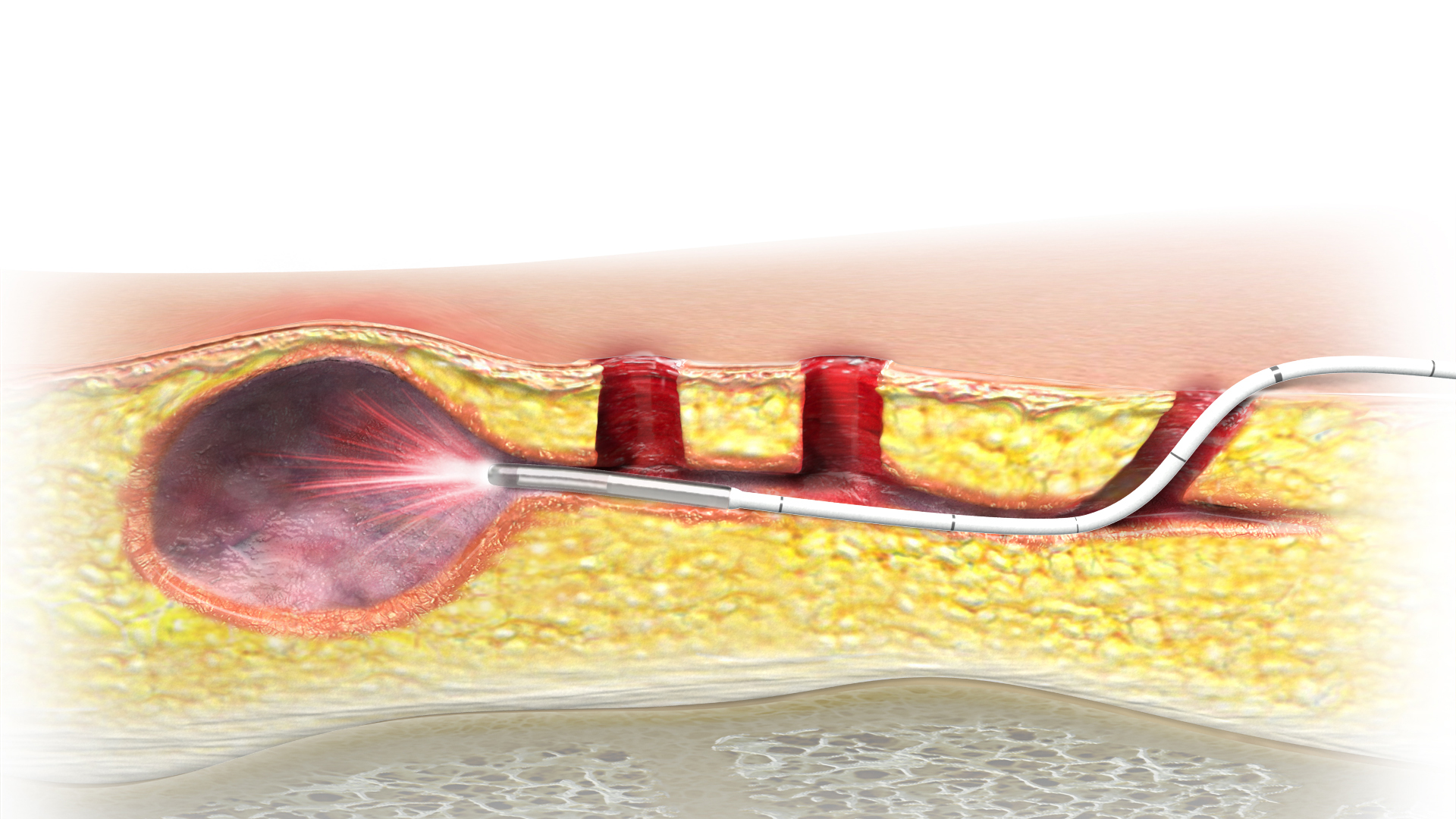
The surgeon cleans the sinus and passes a fine laser fibre into the tract. Controlled laser energy treats its lining and encourages the tract to shrink and close as healing progresses.
The procedure generally involves:
- Assessing the openings and extent of the sinus.
- Removing trapped hairs, debris and unhealthy tissue.
- Introducing the laser fibre through a small opening.
- Applying laser energy along the tract.
- Leaving appropriate openings for drainage during healing.
Small pits may need to be removed or enlarged to allow access. SiLaC therefore creates small wounds, rather than being completely incision-free.
How Does SiLaC Compare with Traditional Surgery?
The main difference is how much tissue is removed and the wound left behind.
Wide Excision and Open Healing
Traditional wide excision removes the sinus together with surrounding skin and tissue. The wound may be left open to heal from its base.
This can treat the disease effectively, but it creates a larger tissue defect. Regular dressings are needed, and complete healing may take weeks or sometimes months.
Excision with Wound Closure or a Flap
Another approach removes the affected tissue and closes the wound, sometimes using a flap to reshape or flatten the buttock cleft.
These procedures involve more extensive tissue cutting and rearrangement than SiLaC. They can be particularly useful for extensive disease or persistent problems after previous treatment.
When excision and closure are chosen, European guidance favours off-midline closure over placing the wound directly in the midline.
SiLaC: Treating the Tract While Preserving Tissue
SiLaC treats the sinus internally and usually avoids removing a broad area of skin and underlying tissue.
This makes it less destructive to surrounding tissue than wide excision, with smaller wounds and potentially less demanding wound care.
The aim is to treat the disease while reducing the physical burden of the operation and recovery.
What Are the Benefits of SiLaC?
For an appropriately selected patient, potential advantages include:
- Less tissue removal than wide excision.
- Smaller wounds and less extensive scarring.
- Less postoperative discomfort.
- Simpler wound care than a large open excision wound.
- An earlier return to everyday activities.
- Day-case treatment in many cases.
- Usually performed under local anaesthetic
These recovery advantages explain the growing interest in minimally invasive treatment. However, results depend on the extent of the disease and the technique used.
Is SiLaC Suitable for Everyone?
No. Suitability depends on the number of openings, the extent and branching of the tracts, previous operations and whether there is active infection.
Localised disease may be particularly suitable for a minimally invasive approach. Extensive networks, substantial scarring or persistent non-healing wounds may benefit from another operation.
SiLaC can sometimes be considered after previous surgery, but a surgeon should explain the likelihood of needing further treatment.
European guidelines recognise laser as an option, while rating the supporting evidence as very low certainty. It should therefore be discussed as one treatment choice rather than a guaranteed replacement for excision.
Can Pilonidal Disease Return After Laser Treatment?
Yes. A sinus may fail to heal completely or recur after initially settling.
Some patients undergo a second SiLaC procedure; others need a different treatment. A recent multicentre study found that roughly seven in ten patients healed after the first procedure, with additional treatments improving overall healing.
Smaller wounds and easier early recovery need to be balanced against the possibility of repeat treatment. SiLaC has not been established as having a lower recurrence rate than every form of excisional surgery.
What Is Recovery Like After SiLaC?
Some tenderness, drainage and a need for dressings should be expected. Your surgeon will explain cleaning, pain relief and follow-up.
Returning to activity and complete wound closure are different milestones. Some patients resume everyday activities within days, while the openings take several weeks to heal.
In one study of 218 patients, average wound healing took approximately four weeks. This is a study result, not a recovery guarantee for every patient.
Your return to work will depend on your symptoms and whether your job involves prolonged sitting, lifting or physical activity.
What Are the Risks of SiLaC?
Possible risks include pain, bleeding, infection or abscess formation, delayed healing, persistent discharge and recurrence. Further drainage or another procedure may be necessary.
Your surgeon should explain these risks alongside the expected benefits and alternative treatments.
Pilonidal Sinus Laser Treatment FAQs
Follow your wound-care instructions and discuss suitable hair management with your clinician. Do not shave an inflamed or healing area unless advised.
More extensive surgery may provide a better solution for complex disease, significant scarring or repeated treatment failure. Modern flap procedures remain valuable options.
It usually avoids the large tissue defect associated with wide excision. Small treatment openings still need care while they heal.
No, usually SiLaC can be performed under local anaesthetic.
No. SiLaC treats the sinus tract beneath the skin. Laser hair removal targets hair follicles and may be discussed separately as part of longer-term care.
Looking for Pilonidal Sinus Treatment in Newcastle?
If recurring pain or discharge is affecting everyday life, specialist assessment can help you understand your options.
At LASE Cosmetic in Jesmond, Newcastle, Mr Jeremy Cundall, Consultant General and Colorectal Surgeon, offers laser pilonidal sinus treatment using SiLaC.
Your consultation provides an opportunity to discuss whether this approach could treat your sinus while avoiding the larger wound associated with wide excision, or whether another procedure would offer a better result.